
The “Green Giant” Myth: Why Maryland Deer Are Eating Your “Resistant” Privacy Screen
Key Takeaways
- “Resistant” isn’t “Proof”: In a Maryland February, hungry deer will strip Green Giants up to 6 feet high unless physically protected.
- Site Matters: Don’t treat heavy clay like a potting mix; planting too deep or in a “bathtub” hole is the #1 killer of these trees.
- Go Native: For a truly low-maintenance, permanent screen, American Holly and Eastern Red Cedar outperform Green Giants in longevity and resilience.
The “Green Giant” Myth: Why Maryland Deer Are Eating Your “Resistant” Privacy Screen
If you live anywhere in the Free State—from the rocky ridges of the Catoctins to the flat, sandy expanses of the Eastern Shore—you’ve seen them. The “Green Soldiers.”
Rows of 20 perfectly spaced Thuja Green Giants standing guard along a property line. They look magnificent when they go in. The nursery tag promised you the world: “Grows 3 feet a year!” “Deer Resistant!” “Instant Privacy!” It feels like the cheat code for blocking out the neighbors.
But then comes February.
The wind is whipping down the “Suburban Wind Tunnel” between your house and the neighbor’s. The ground is frozen solid. Your expensive green wall is turning a sickly bronze. Worse, you walk out one morning to find the bottom four feet stripped bare, leaving you with a row of what I call “Lollipop Trees.”
I’m not here to tell you not to buy Green Giants. They are impressive trees. But I am here to tell you the hard truths about keeping them alive in our unique Maryland climate—and exactly what to plant if you want a screen that actually lasts.
Part I: The Hard Truths (10 Questions Your Nursery Tag Didn’t Answer)
We all want the “plant it and forget it” solution. Unfortunately, nature has other plans. Here are the top questions I get asked when the dream of the Green Wall starts to fade, and the real solutions to fix it.
1. “Are Green Giants actually deer-proof?”
The Myth: “Resistant” means “Proof.”
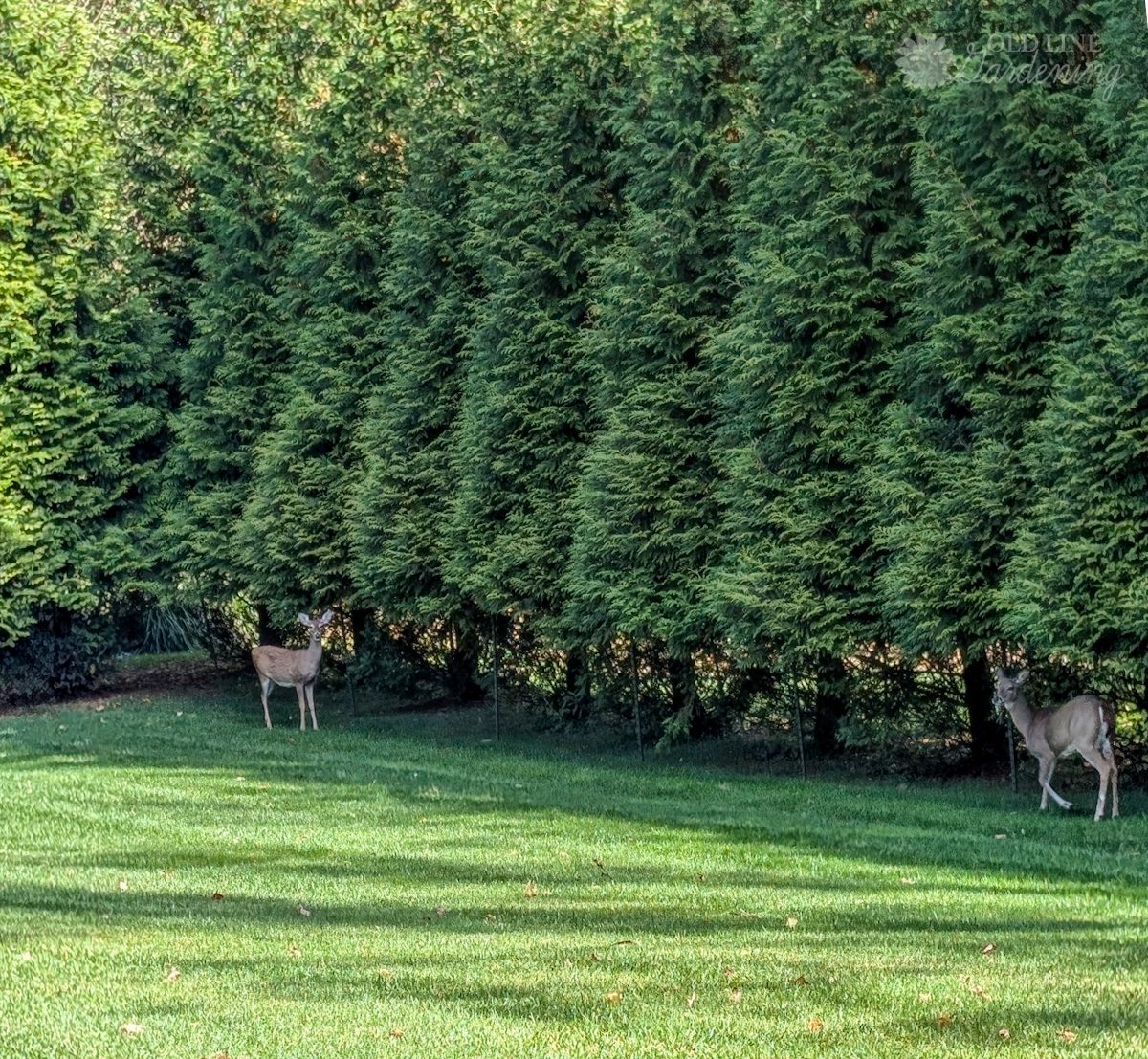
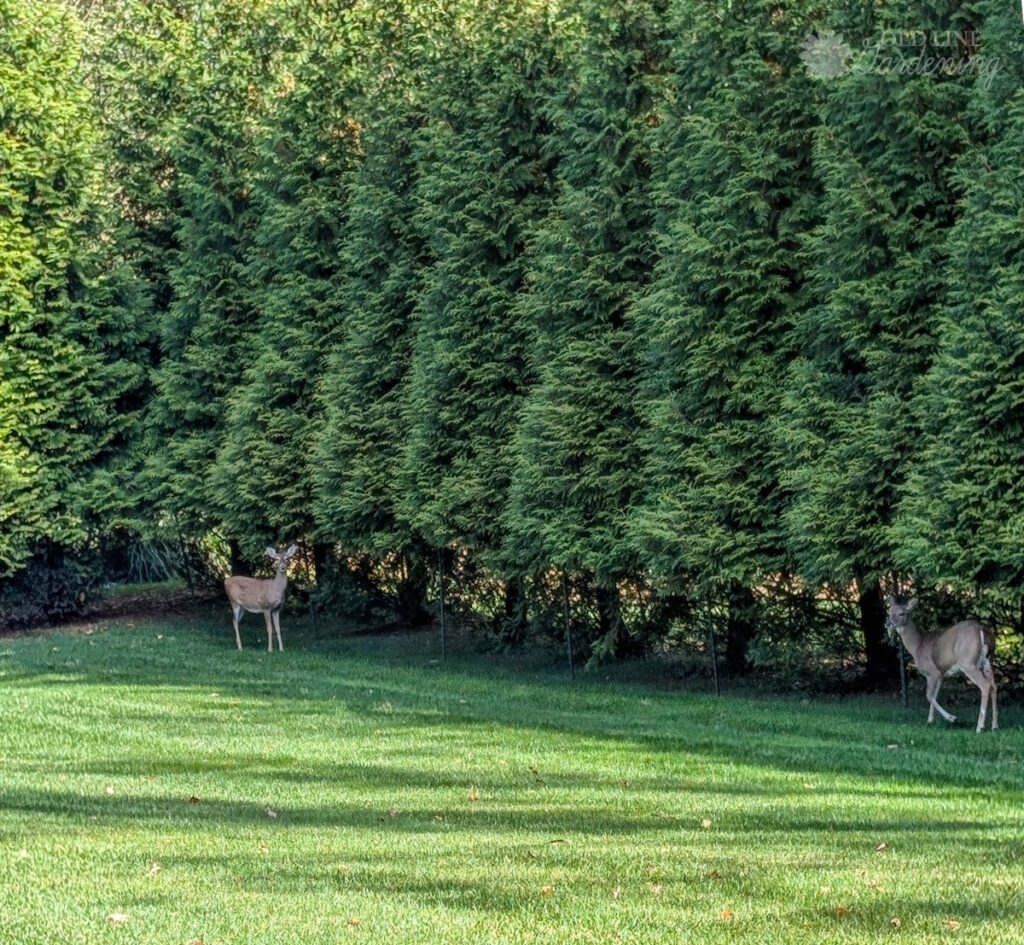
The Hard Truth: To a starving deer in a Maryland February, “Resistant” just means “I’ll eat this last.” When the acorns run out, deer will eat the soft foliage of a young Green Giant. They will strip it exactly as high as they can reach—about 6 feet. Once those bottom branches are eaten, the tree cannot regrow them.
The Fixes:
- The Cage (The Nuclear Option): This isn’t optional in rural areas. You must cage your trees until the foliage is above the browse line (approx. 6 feet).
- The Scent Schedule (The Suburban Option): If you won’t do cages, you have to play offense. UMD Extension Deer Management suggests rotating repellents.
- Week 1: Mint-based deterrent.
- Week 3: Putrescent Egg/Garlic spray (like Liquid Fence).
- After Heavy Rain: Re-apply immediately.
2. “Why are my trees turning brown?”
The Myth: “It’s turning brown, so it’s dying!”
The Hard Truth: It depends where the brown is.
- Outer Tips Brown/Bronze? That is Winter Burn. The wind is acting like a hair dryer, sucking moisture out of the needles while the roots are frozen.
- Inner Needles Brown? That is Natural Needle Shed. If you see the interior of the tree turning brown in October/November, do not panic. The tree is just shedding its old “clothes” to prepare for winter.
The Fix:
If we get a “False Spring” in January where the ground thaws, water them immediately.
3. “When is the best time to plant them?”
The Myth: “I’ll plant them in May so they grow all summer.”
The Hard Truth: Planting in late spring is a gamble. You are forcing a new tree to establish roots right before the brutal, humid Maryland summer.
The Fix: The Maryland Goldilocks Zones
- Best Time: September – November. The air is cool, but the soil is still warm.
- Second Best: March – April. Get them in as soon as the ground thaws.
- Soil Tip: Green Giants prefer a pH of 5.0 to 6.5.
4. “How far apart should I really space them?”
The Myth: “I need instant privacy, so I’ll plant them 3 feet apart.”
The Hard Truth: When trees touch too early, the interior branches die from lack of light, and you invite fungal diseases.
The Fixes:
- Standard: Plant them 5–6 feet apart.
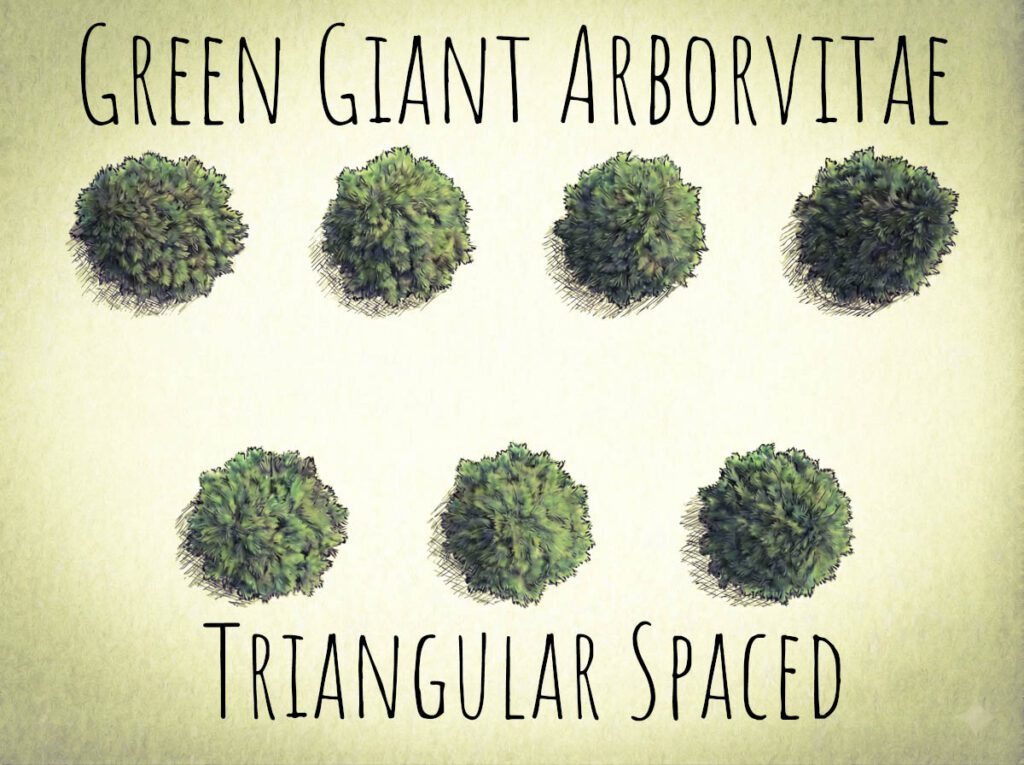
- The “Zig-Zag” (Triangulation): If you have 10+ feet of depth, plant two staggered rows. It provides an instant visual block, but every tree maintains airflow.
5. “Can I plant them in my soggy yard?”
The Myth: “These big trees drink a lot, so they’ll dry out my swampy lawn.”
The Hard Truth: Green Giants tolerate “damp,” not “swamp.” If water sits in the hole for 24 hours, the roots will rot.
The Fix: “Plant Proud”
In heavy clay, do not create a “swimming pool” for roots.
- Dig your hole shallow—only 2/3 the depth of the root ball.
- Set the tree in so the top third is sticking up above ground level (“proud”).
- Use the dirt you dug out to build a gentle ramp up the sides of the root ball.
- Do not amend with potting soil.
6. “Will roots damage my septic system?”
The Myth: “It’s an evergreen, so the roots stay small.”
The Hard Truth: Green Giant roots are hydrotropic (water-seeking). Your septic drain field is a buffet.
The Fix:
Keep the tree at least 30 feet away from the drain field.
7. “Will bagworms kill them?”
The Myth: “Bugs won’t bother them.”
The Hard Truth: Bagworms and Spider Mites love Thuja.
- The Test: Hold a white paper under a branch and shake. If “pepper flakes” fall and move, you have mites.
The Fixes:
- Hand-Pick: Works for young trees.
- Nature’s Army: Plant native New England Asters nearby to attract parasitic wasps that eat bagworms. Beneficial Insects Guide.
8. “Can I top them if they get too tall?”
The Myth: “I’ll just chop the top off when it hits the HOA limit.”
The Hard Truth: A topped conifer becomes a flat-top snow catcher that eventually splits.
The Fix:
Prune Candles. Trim the new green growth annually to slow it down. If you have power lines, choose a smaller cultivar like ‘Steeplechase’.
9. “Do I need to fertilize to get that 3-foot growth?”
The Myth: “I need to pump it with Miracle-Gro.”
The Hard Truth: In our rich clay soils, heavy fertilizer pushes weak growth that snaps in ice storms.
The Fix:
Use Leaf Mold (shredded leaves) as mulch. Keep mulch 3 inches away from the trunk to prevent rot.
10. “What happens if one tree dies in the middle?”
The Myth: “I’ll just plant another Green Giant in the gap.”
The Hard Truth: You can’t. The mature trees will shade out the baby tree.
The Fix:
Plant a Tapestry Hedge. Mix 1 American Holly for every 4 Green Giants. It breaks up the visual line and prevents monoculture die-off.
Part II: The Alternatives (The Gold Standard)
You don’t have to settle for the same tree everyone else has.
The 5 Native Powerhouses
These are built for Maryland soils and support our local wildlife.
| Plant Name | Growth Rate | Superpower | Best For | Deer Resistance |
|---|---|---|---|---|
| Eastern Red Cedar (Juniperus virginiana) |
Medium (1–2 ft/yr) |
Invincibility: Handles salt, rock, and drought. | Tough conditions (Roadsides/Shore). | High |
| American Holly (Ilex opaca) |
Slow (6–12 in/yr) |
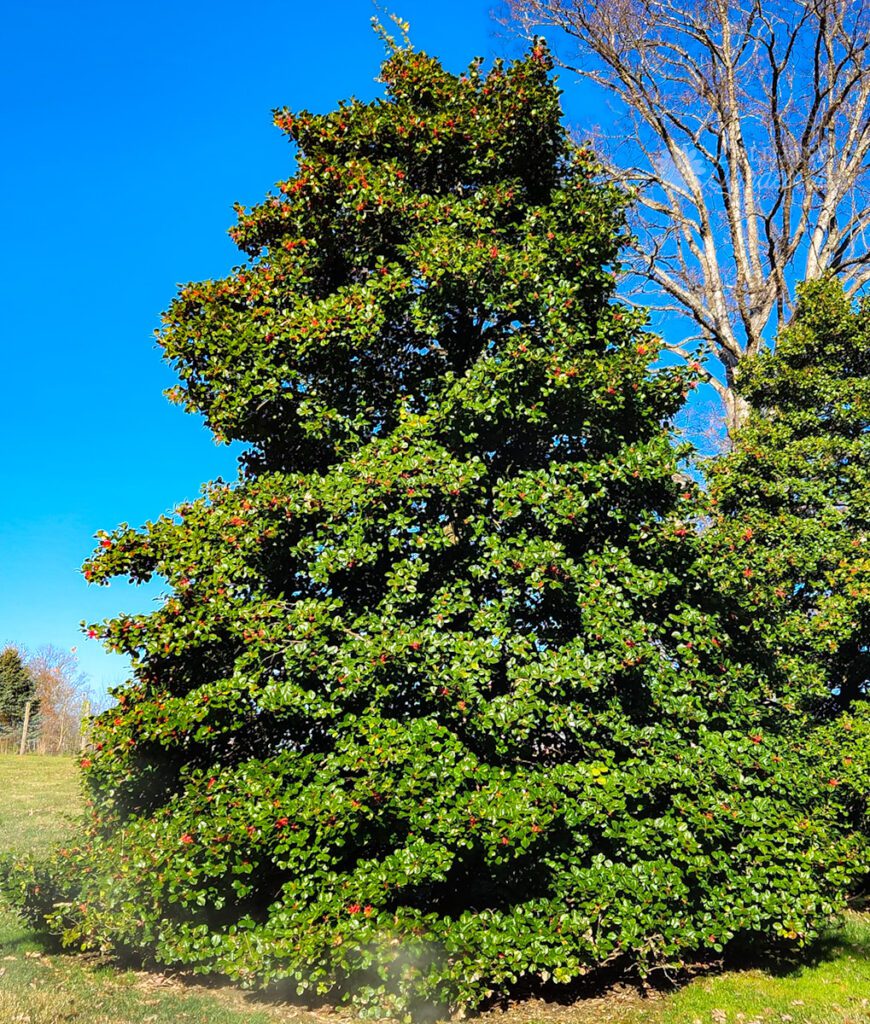
The Fortress: Spiny leaves hurt mouths. | Deep privacy and legacy planting. | Proof |
| Wax Myrtle (Morella cerifera) |
Fast (3–5 ft/yr) |
The Sprinter: Fixes its own nitrogen. | Wet yards and coastal wind buffers. | High |
| Inkberry Holly (Ilex glabra) |
Medium (1–2 ft/yr) |
The Boxwood Swap: Broadleaf evergreen look. | Wet areas requiring 6–8ft screen. | Mod/High |
| Southern Magnolia (Magnolia grandiflora ‘Little Gem’) |
Slow (1 ft/yr) |
The Showstopper: Huge flowers. | Protected suburban spots (avoid wind). | High |
The 5 Specialized Cultivars
Bred for specific problems like tight spaces or speed.
| Plant Name | Growth Rate | Superpower | Best For | Deer Resistance |
|---|---|---|---|---|
| ‘Taylor’ Juniper | Medium | The Pencil: Grows straight up (3ft wide). | Very narrow side yards. | High |
| Cryptomeria ‘Yoshino’ | Fast | Texture: Turns bronze-purple in winter. | Breaking up a boring green wall. | Moderate |
| ‘Dragon Lady’ Holly | Medium | Tight Squeeze: Very upright hybrid. | Spaces with only 5ft width. | Proof |
| ‘Nellie R. Stevens’ Holly | Fast | Suburban Classic: Tougher/faster than American Holly. | Parking lots and compacted soil. | Proof |
| ‘Steeplechase’ Arborvitae | Fast | Improved Giant: Finer foliage than Thuja. | Smaller yards wanting the “Giant” look. | Moderate |
Conclusion: Know Your Land, Know Your Plan
There is no single “Magic Tree” that works for every yard in Maryland. The Green Giant is a tool, but it’s not the only tool in the shed.
Success starts with knowing your conditions. Do you have the “Wind Tunnel”? Do you have the soggy clay of the Piedmont or the sandy salt of the Shore? Once you know your land, you can pick the plan that fits.